Reliability testing Timisoara
Advanced testing and product validation portfolio
The ISO/IEC 17025-accredited testing laboratory from Timisoara delivers high-precision qualification services across industries by simulating a wide range of real-world conditions to ensure product reliability, safety, and performance.
Services
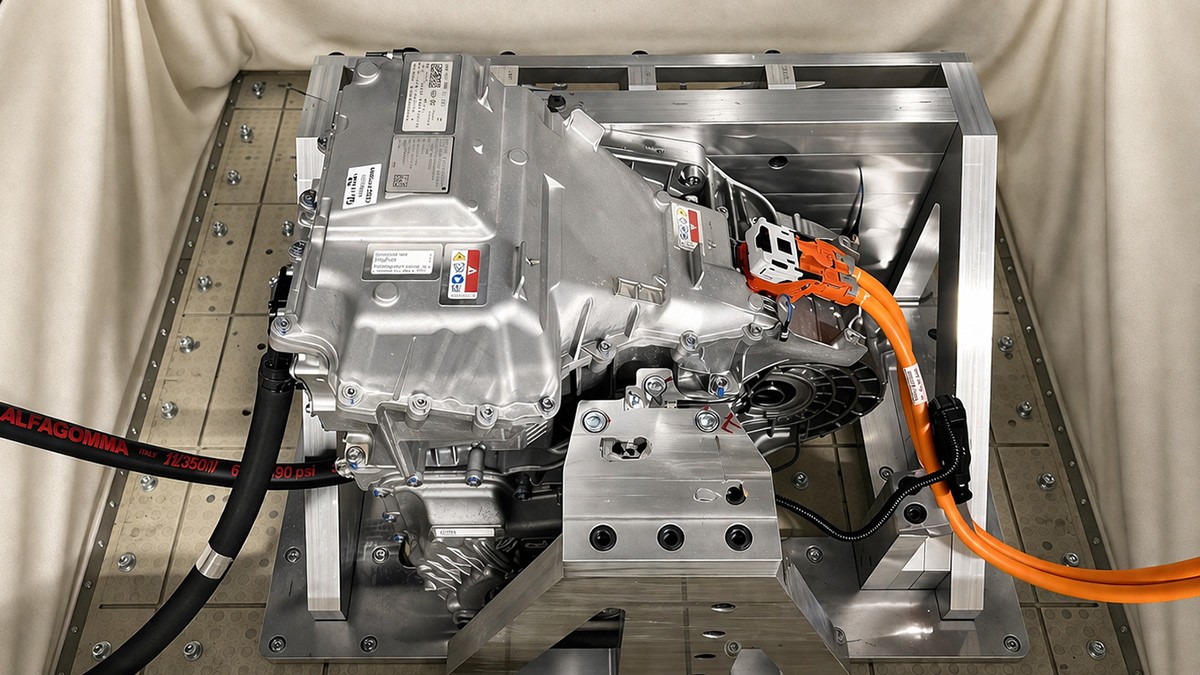
The laboratory offers a wide range of specialized services, including:
- Definition and tailoring of test plans according to international / customer specifications and definition of field application (mission profiles) through the validation test management team
- Reliability test execution according to all relevant international automotive and customer standards
- Develop, build up and update simulation and monitoring equipment through our test system development teams
- Provide independent and objective test results for design /product validation and engineering phases
For additional information or service requests, please contact the address: DL_IL_vtl_ro@mail.schaeffler.com
Accreditation
All accredited test methods performed in the laboratory are recognized and published by RENAR, the Romanian national accreditation body, ensuring compliance with international standards and assuring the reliability and credibility of our results.
Qualification Laboratory Reliability (QL LAB TSR REL)
Timisoara | Romania
RENAR LI 1293
Test methods
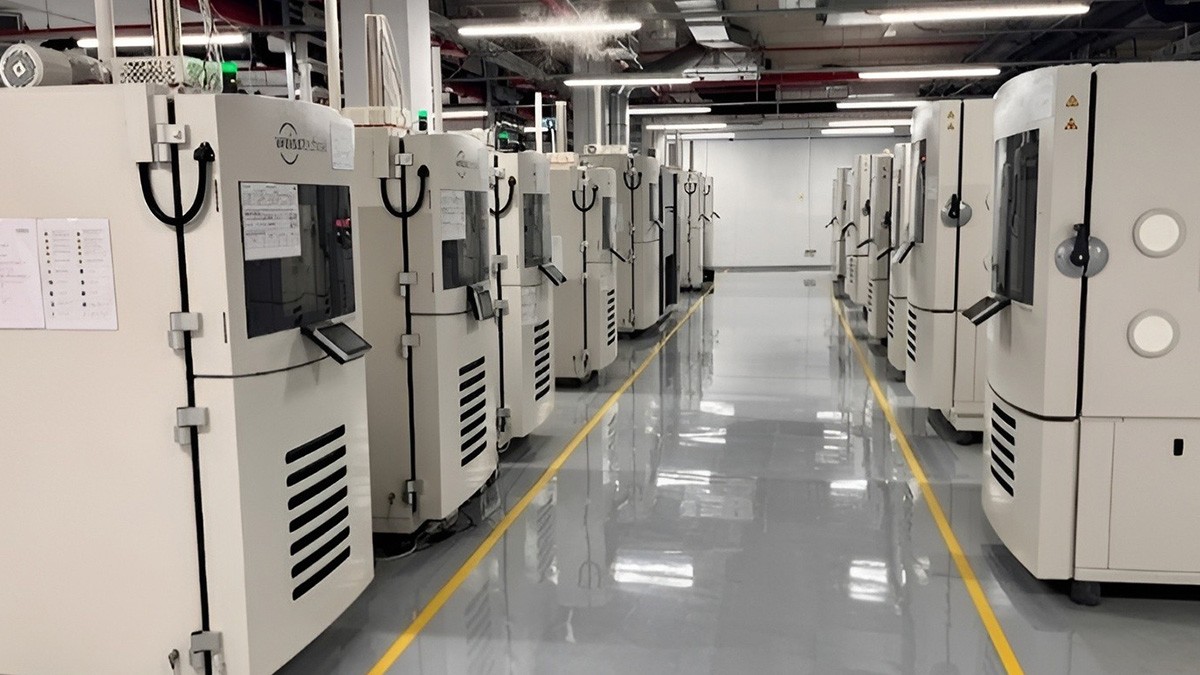
At Schaeffler Technologies’ Timisoara Environmental Testing Laboratory, we can deliver world-class qualification services for automotive electronics as well as a range of different industries, operating under globally recognized standards (e.g., automotive IEC 60068-2 series and ISO 16750 series), simulating real-world conditions to validate product durability and performance.
The range of methods and services include:
- Climatic & thermal testing
- Corrosion & chemical resistance
- Mechanical load & vibration
- Ingress protection & contamination
- Functional performance under stress
Temperature & Humidity testing
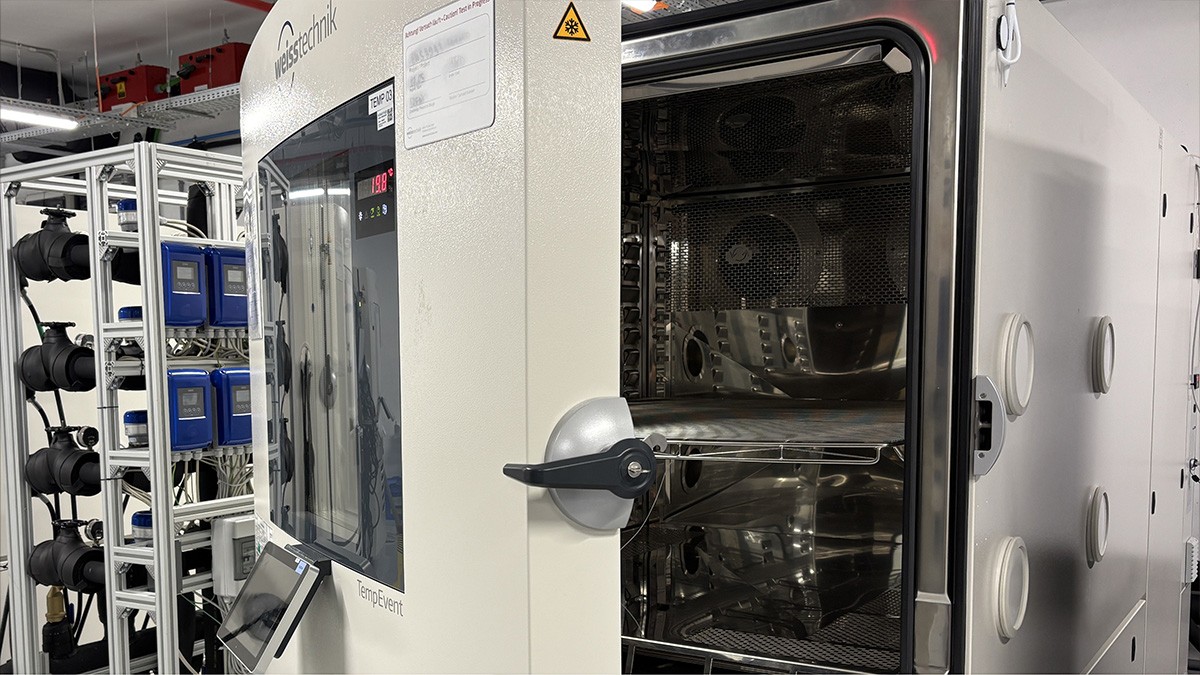
Electronic systems are exposed to long-term temperature variations, humidity cycles, and condensation risks throughout their lifecycle. These factors can lead to corrosion, material degradation, and electrical failures if not properly validated. Climatic and temperature testing ensures your products remain reliable and safe in any environment—from extreme heat to freezing cold
Environmental test portfolio
- Temperature storage/operation tests
- Temperature change and step tests
- Rapid temperature variation
- Damp heat constant and cyclic (with/without frost)
- Dew formation and condensation
- Lifetime endurance
Capability
- Temperature range: -70°C to +180°C
- Humidity range: 10%RH to 98%RH
- Change rate: up to 15K/min
Thermal shock testing
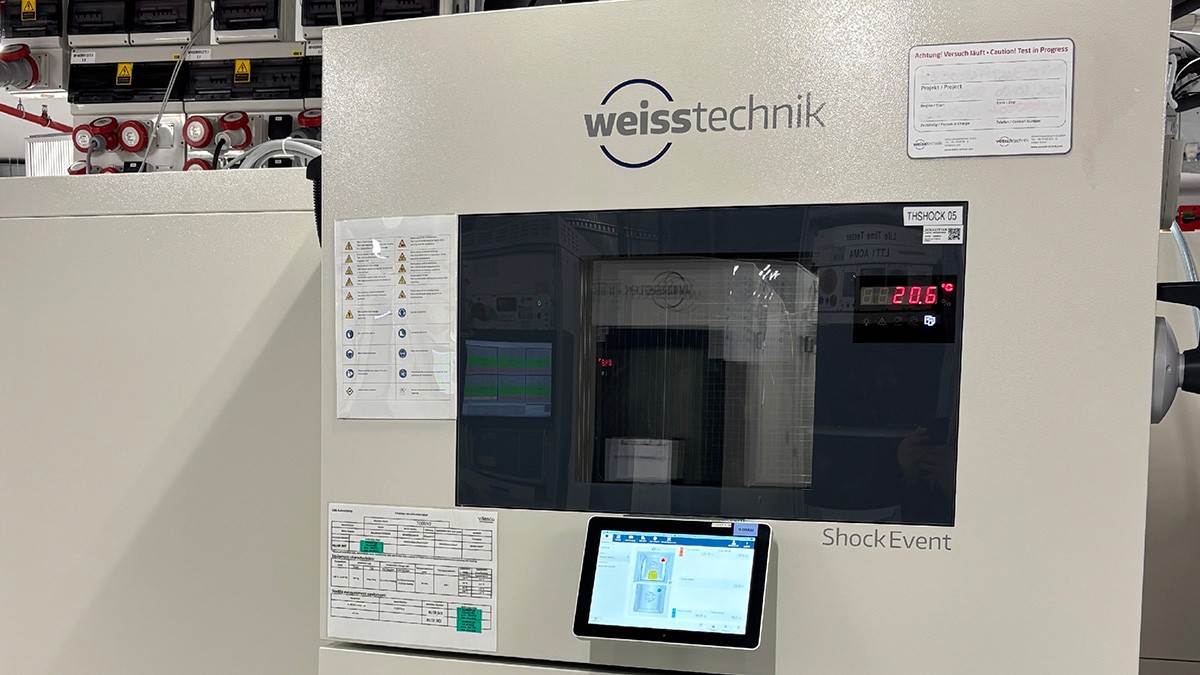
Designed for fast and controlled transitions between extreme temperature zones. Components are alternated between hot and cold environments at high speed, simulating the most demanding operational conditions
Environmental test portfolio
- Rapid transfer between hot and cold zones
- High-speed thermal cycling
- Extreme temperature endurance
- Lifetime stress validation
Capability
- Hot zone: up to +220°C
- Cold zone: -80°C
- Test space: up to 600 L
Iced water shock testing
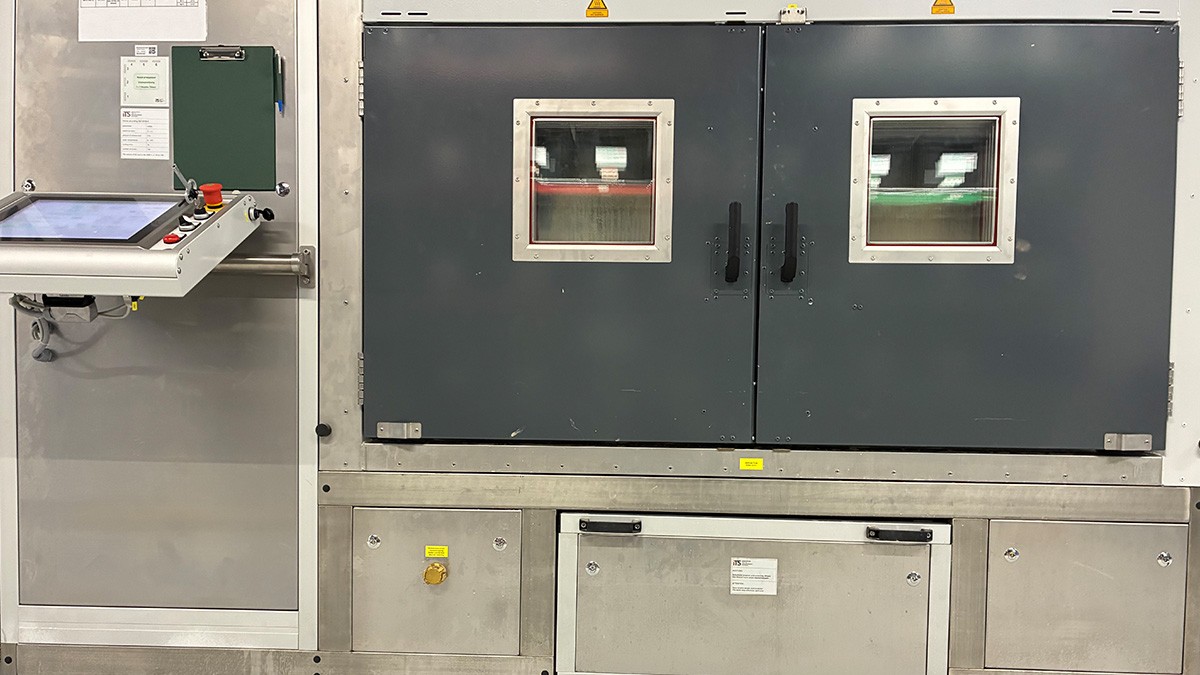
Electronic components can be exposed to sudden contact with cold water—such as driving through flooded areas or marine spray conditions. These shocks can cause thermal stress, seal failure, and rapid cooling cracks. Iced water shock testing ensures your products maintain mechanical integrity and sealing performance under these extreme conditions.
Environmental test portfolio
- Cold water splash simulation
- Full immersion under iced water
Capability
- Water temperature: 0°C to +4°C
- Heating capacity: up to 160 °C
- Test space: up to 1600 L
IP water testing
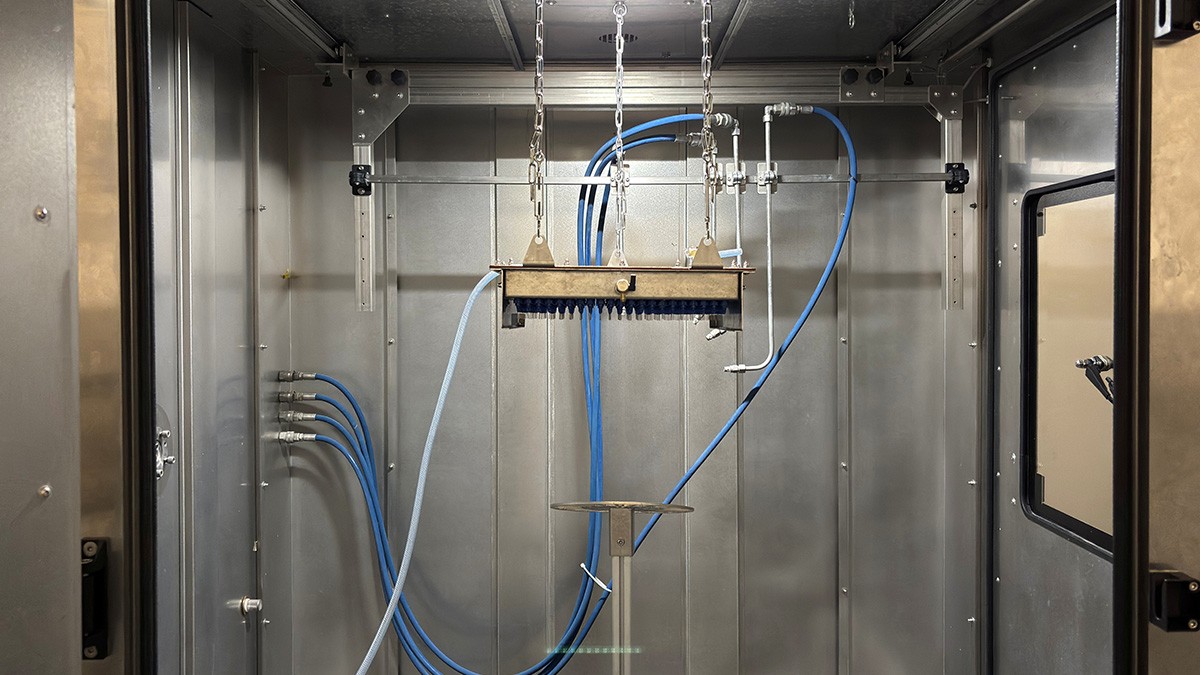
Electronic components must withstand exposure to water in real-world conditions—such as rain, splashes, high-pressure cleaning, or immersion. Failure to ensure proper sealing can lead to short circuits, corrosion, and catastrophic failures. IP water testing validates sealing integrity and compliance with international ingress protection standards.
Environmental test portfolio
- Water spray and splash simulation
- High-pressure jet testing
- Immersion tests
Capability
- Water pressure: up to 100 bars
- Flow rate: up to 16 L/min
- Immersion depth: up to 1 m
- Water temperature: up to 90 °C
IP dust testing
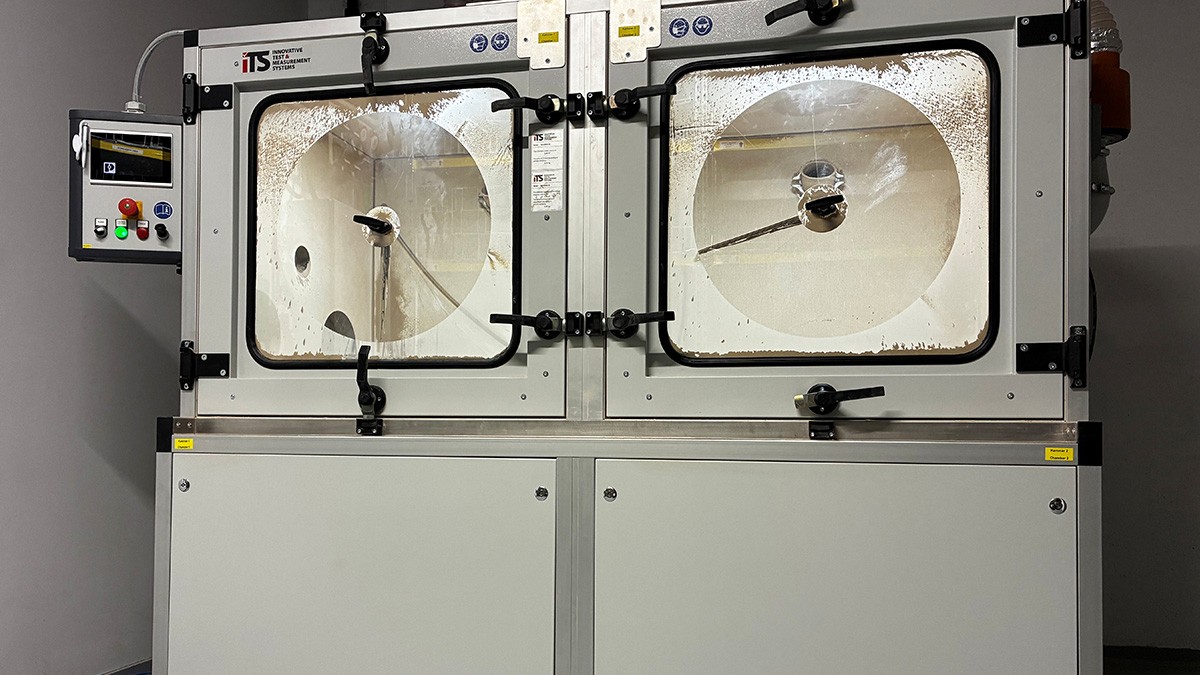
Dust ingress can compromise electronic components by causing abrasion, contamination, and electrical short circuits. In harsh environments—such as off-road, industrial, or desert conditions—dust protection is critical for long-term reliability. IP dust testing ensures your products meet sealing integrity requirements and comply with international ingress protection standards
Environmental test portfolio
- Compliance with IP dust protection levels
Capability
- Dust type: ISO fine dust (talcum)
- Standards: ISO 20653, IEC 60529 (IP5X, IP6X)
Corrosion testing (salt mist)
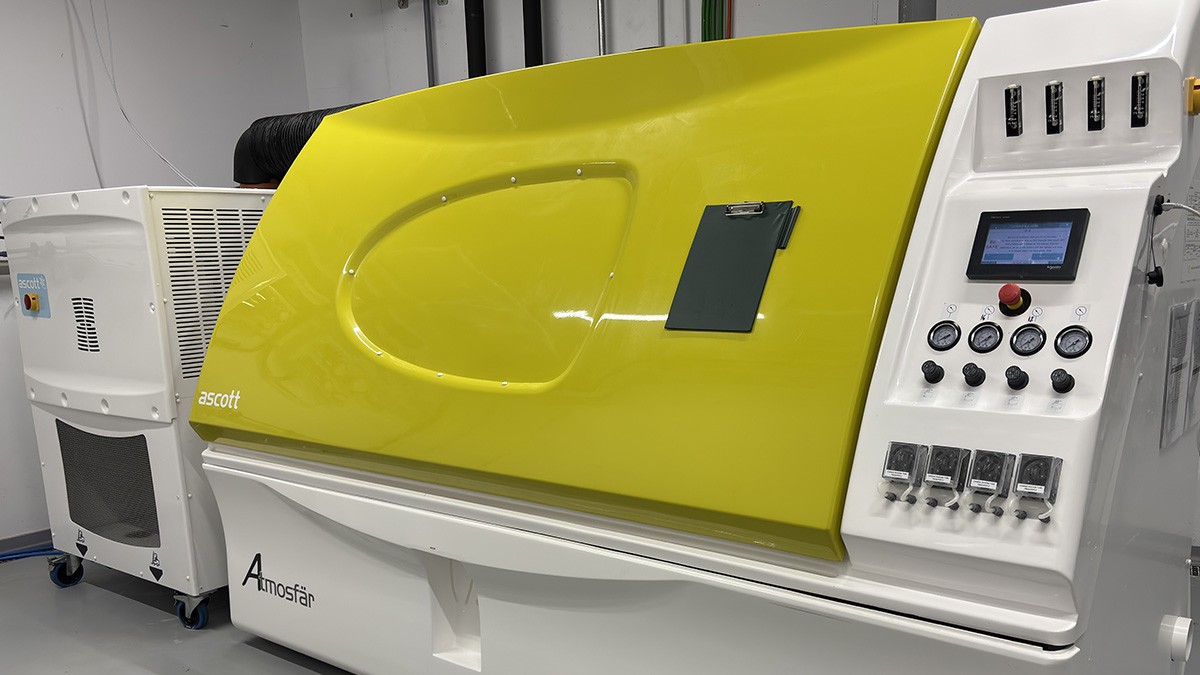
Electronic components exposed to harsh environments such as coastal areas, winter roads, or marine conditions, face corrosion risks from salt and chemical contaminants. Corrosion can lead to material degradation, connector failure, and reduced product lifespan. Salt mist testing ensures your products maintain structural integrity and electrical reliability under these aggressive conditions
Environmental test portfolio
- Salt spray exposure
- Cyclic corrosion testing
Capability
- Temperature range: 23℃ ÷ 60℃
- Humidity Range: 10% to 95%
- Test Medium: 5% NaCl
- Volume: 1300 L ÷ 2600 L
- Drying; Wetting: 23℃ ÷ 80℃
Mechanical shock and vibration testing
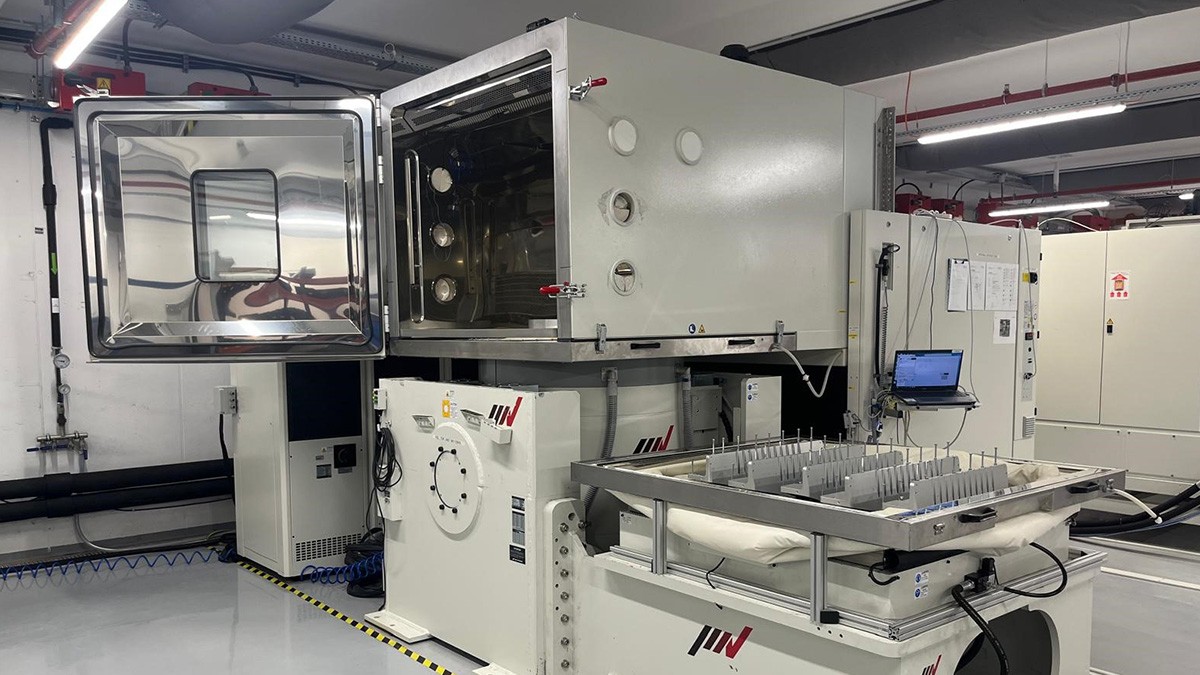
Our vibration and shock testing ensures your products withstand real-world conditions—whether on the road, in industrial environments, or during handling. Electronic and mechanical systems are exposed to dynamic stresses during transportation, operation, and lifetime use. These stresses include vibration and shock loads that can lead to structural fatigue, component failure, and reduced reliability if not properly validated
Environmental test portfolio
- Sinusoidal, Random , Mixed mode, Mechanical Shock tests
- Resonance analysis, Modal analysis
Capability testing
- Frequency range: 5 Hz to 2.000 Hz
- Acceleration: up to 150 g
- Displacement: up to 4inch pk-pk
- Force rating: up to 125 kN
- Payload: up to 1.000 kg
Analysis
- Scanning vibrometer: up to 100kHz, complex geometry scanning
- High-frequency shaker: up to 6.5kHz
- Impact hammer: ±444 N pk
Material analysis & free fall testing
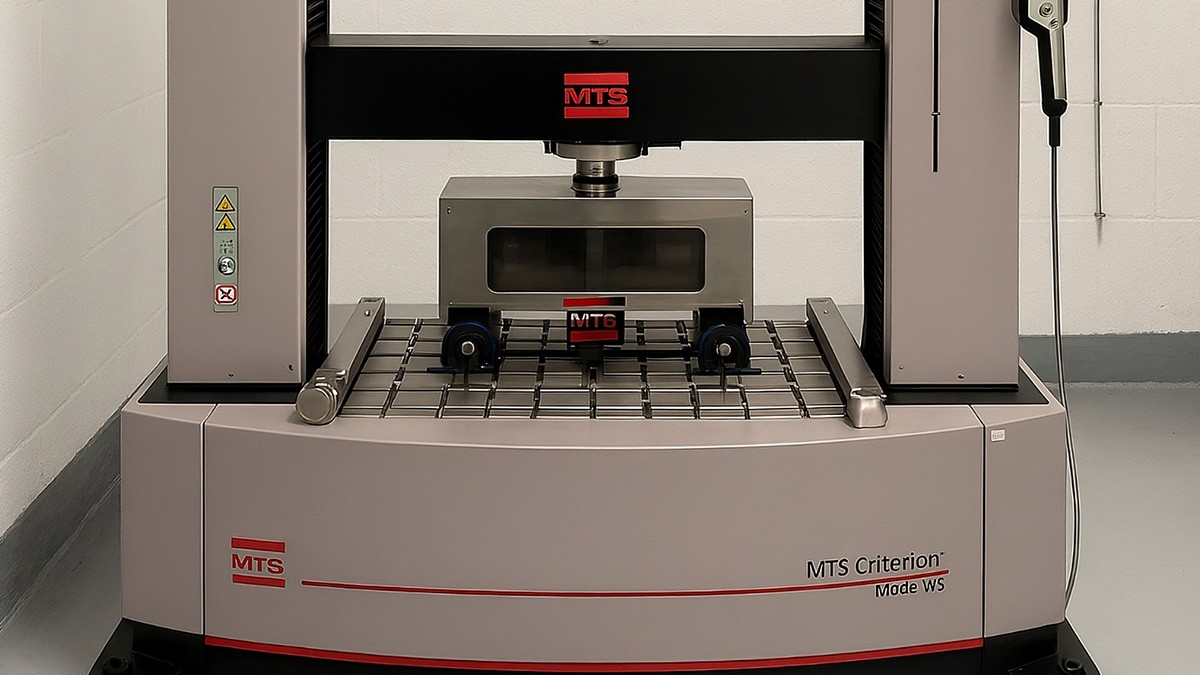
Our material analysis and free fall testing ensure structural integrity, durability, and compliance with mechanical strength requirements under real-world conditions. Components and assemblies face static and dynamic loads as well as accidental drops throughout their lifecycle. These stresses can lead to deformation, fracture, fatigue, or functional failure if not properly validated
Environmental test portfolio
- Tensile and compression tests
- Material analysis (Breaking force, stress-strain characterization)
- Free Fall, drop tests
Capability
Material analysis
- Force: up to 50kN
- Testing area: up to 1.000mm width, 1.500mm height
- Accuracy: 1%
- Temperature: -40 - 120 ℃
Free Fall
- Surface: 600x800mm (extandable)
- Height: up to 5.000mm
Contact
Reliability testing laboratory Timisoara
Schaeffler Technologies Engineering Romania SRL
Aurel Pop 28-30
300668 Timisoara
Romania
Liviu Olar
Schaeffler Technologies Engineering Romania SRL
Aurel Pop 28-30
300668 Timisoara
Romania